Want to Increase Occupancy? Focus on the Amenities
The return-to-office (RTO) movement continues to gain momentum. According to a recent Founders Reports study, 61% of US companies have a formal RTO policy that requires employees to work in the office a minimum number of days each week. Corporate giants like Amazon, JPMorgan Chase, Dell, Instagram, and Truist are mandating that employees work from the office 5 days a week. While the efficacy of RTO mandates is open to debate, the reality is that most companies continue to offer hybrid work.
Creating a Workspace that Works for Employers and Employees
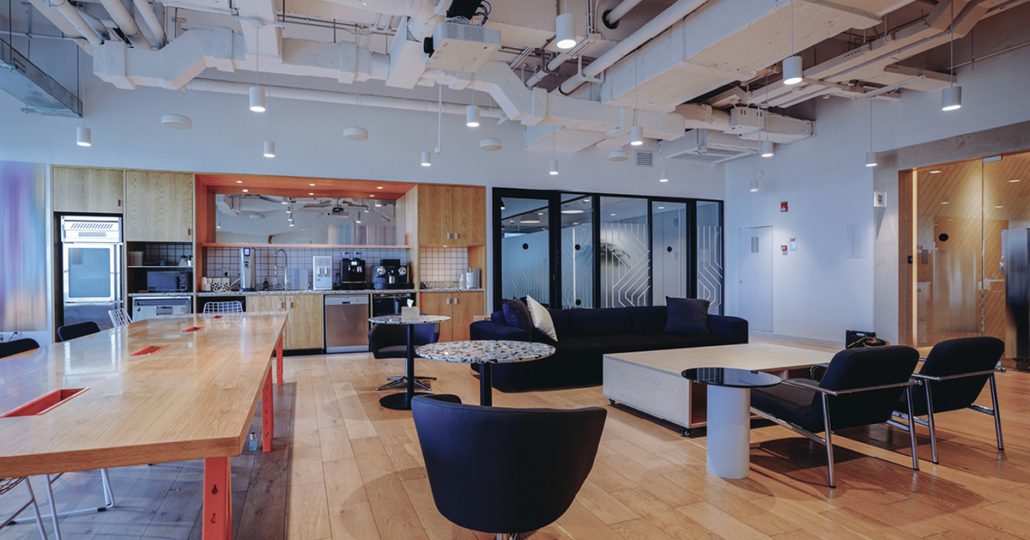
There are a number of valid reasons why management wants to bring employees back to the office. A few reasons are: In-office work fosters better collaboration and faster problem-solving, builds a stronger company culture and team cohesion, and provides easier mentoring and onboarding for junior staff. For companies employing a hybrid model, a key component of attracting and retaining top talent, boosting productivity, and building a thriving culture is providing amenities that make employees want to come to the office.
Amenities Contribute to Employee Satisfaction
 A recent study by Unispace found that those who were happiest about returning to the office generally missed the social aspects of the workplace—social interaction and the opportunity to collaborate. But 95% felt their workspace needed improvement to create a desirable environment for them and their peers. According to the report, the top office features likely to encourage current employees and new recruits to spend more time in their workplaces were access to outdoor space, more space for social gatherings, and more collaborative space, which enables them to better get to know their colleagues in the office. In addition, 74% of employees said that having separate spaces for collaborative activities and quieter work would make them happier to return to the office.
A more comprehensive list of amenities that improve the tenant experience was developed by British workplace advisory firm LEVEL. Below is LEVEL’s list of office amenities that influence employee retention.
The Top Amenities Employees Value in 2025
Wellness and Health Facilities
Employees expect workplaces that support mental and physical health.
- On-site gyms or subsidized fitness memberships
- Meditation and quiet rooms
- Healthy food options in cafés and vending
- Access to outdoor spaces or terraces
Impact: Improves well-being, reduces stress, and signals commitment to employee health.
Collaboration Spaces
Hybrid work means people come to the office for connection, not solitude.
- Large meeting rooms with advanced AV for hybrid calls
- Informal lounges for brainstorming
- Project rooms that can be reconfigured quickly
- Open breakout areas for spontaneous interaction
Impact: Increases productivity and creativity while reinforcing company culture.
Quiet and Focused Work Zones
While collaboration is critical, focused work still matters. Offices without quiet space push employees to stay home.
- Soundproof pods or focus rooms
- Library-style zones for deep concentration
- Acoustic treatments in open areas
Impact: Supports hybrid flexibility by giving people real choice in how they work.
Technology-Enabled Meeting Rooms
Bad technology kills hybrid collaboration. Employees judge offices by whether tech “just works.”
- High-speed, reliable Wi-Fi throughout the building
- Video conferencing equipment with cameras, mics, and screens
- Smart booking systems for desks and rooms
- Integrated collaboration tools
Impact: Reduces frustration, boosts engagement, and supports distributed teams.
Sustainability Features
Employees — especially younger generations — care about sustainability. Offices that ignore this risk losing credibility.
- Energy-efficient HVAC and lighting
- Recycling and waste management systems
- Green certifications (BREEAM, LEED, WELL)
- Bike storage and electric vehicle charging
Impact: Builds pride in the workplace and supports ESG commitments.
Convenience and Lifestyle Amenities
Offices that fit into daily life make commuting worthwhile.
- On-site childcare support or partnerships
- Food and drink options, from quality coffee to healthy lunches
- Proximity to transport hubs
- Concierge services for dry cleaning or parcel delivery
Impact: Reduces friction in daily routines, making office attendance easier.
Opportunities for Landlords
Under the hybrid model, fewer employees are coming into the office on some days, typically Mondays and Fridays. Companies are finding they require less square footage. This means they can reduce their leasing costs at their existing location or improve their employee experience through a flight to quality—relocating to a building with better amenities. A 2024 Brookfield report noted that “90% of all U.S. office vacancies are contained in the bottom 30% of buildings… but the top quartile of office buildings are experiencing record-high rents and stable vacancy rates. We believe this growing divide will only widen as legacy leases expire and tenants look for new space that reflects evolving business culture to engage employees and meet sustainability goals.”
The report also includes “dense amenity packages” among the criteria for high-performing buildings. Such buildings include access to fitness and conference centers, communal meeting areas, a multitude of food and beverage options, which can include proximity to a rich selection of neighborhood amenities, and outdoor space.”
Today, the market remains heavily influenced by the tenant flight to quality, and landlords with well-located, highly amenitized properties will continue to outperform.
Bryan Koop, Executive VP for BXP, the largest office REIT in the U.S., discussed the value of amenities for his firm’s properties during a panel discussion in Boston. He characterized office space as a tool for his firm’s clients. “They [tenants] don’t want office space,” he said. “What they desire is the most productive workforce, the most productive people, the happiest people.” He added that amenities should not be a “check-the-box” item but should instead reflect what tenants in the building actually need. “But I will tell you, a thoughtfully conceived amenity package is essential in terms of our future.”
Office building owners or investors purchasing value-add assets would be wise to invest in well-thought-out amenity packages or risk making their properties obsolete. Capital investment can be costly, but the increased ROI from attracting and retaining higher occupancy levels can justify the outlay.
Contact one of our trusted real estate advisors to learn more about optimizing your CRE office portfolio.