Q1 Industrial Market Reports: It’s Still a Tenant’s Market
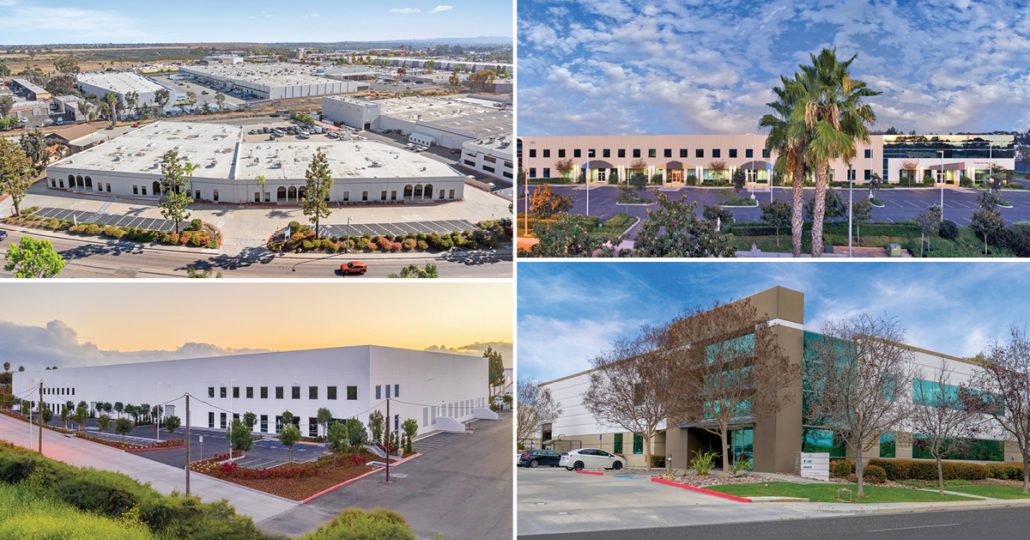
In his assessment of the Inland Empire industrial market, Associate Braden Sprenger of the Voit Ontario office stated what could readily be applied across the full spectrum of the industrial market, not only in Southern California but nationwide. “Notwithstanding the commercial real estate community’s eternal optimism, the reality on the ground is more complicated than many would hope,” he asserts. “The headlines haven’t helped: global conflict, persistent inflationary pressure, rising fuel costs, and ongoing uncertainty around trade policy continue to create friction across the supply chain.”
Prior to the U.S.-Iran conflict, CoStar projected that the U.S. national industrial vacancy rate would continue to rise in 2026, from its current level of 7.5% to 7.8% by the end of 2026, then decline through 2027. In an April release, Costar reported that, after seeing significant gains from 2021-23, “U.S. industrial asking rent growth has moderated across the three lease-size ranges”, with 50,000 SF and greater properties seeing a 2.7% decrease, 25,000-50,000 SF properties remaining flat, and those under 25K seeing a slight increase. “Small-bay tenants have seen significant rent increases over the last few years, as this segment of the market has seen limited supply additions,” said Juan Arias, national director of industrial analytics at CoStar Group. “That said, rent growth is moderating as smaller businesses that focus on these lease-size segments are facing greater uncertainty amid the current economic backdrop.”
Southern California
Most of the SoCal markets are aligned with the national trajectory of the industrial market on a year-over-year basis. In Q1, all the SoCal markets saw an increase in availability and a continued downward trend in asking rates. Although not all SoCal markets showed an increase in vacancy rates in Q1 — Inland Empire, Los Angeles, and Mid Counties registered a slight decrease — there was a year-over-year rate increase in all markets except Mid Counties. Ironically, Mid Counties is experiencing the greatest year-over-year drop in asking rates — nearly 11% ($1.46 vs $1.30). This is creating real opportunities for tenants in the market, as landlords are offering free rent and other concessions in addition to lowering lease rates. On the positive side for landlords, there has been a pronounced slowdown in the pipeline and deliveries for new supply in most markets.
There’s also good news for industrial users looking to own their own real estate to control costs and create equity. As Loren Cargile, VP/Partner in the Los Angeles office, notes in his analysis, the SBA 504 program lending rate has decreased from 6.51% in January of 2025 to 5.72%, which has been generating strong owner-user activity at the start of 2026.
Here are some highlights from our Q1 industrial market reports.
Inland Empire
 The vacancy rate increased by 16.45% year over year to 8.82%, and the availability rate by nearly 10% to 12.31%. Sublease availability remains a significant factor in the market, with 15.6M SF of sublet space available at the end of Q1, in stark contrast to 3M SF at the end of Q2 2022.
The average asking rate in Q1 was $0.95 per square foot per month, down 7.7% from a year ago, continuing the three-year decline. Landlords are offering more aggressive leasing concessions, such as rental abatement, as they pursue tenants more aggressively. Construction has slowed considerably, with approximately 1.6 MSF delivered through the first quarter of 2026, far below the pace of the historically low 12 MSF delivered in 2025. “While new construction starts have slowed, the market is still working through existing inventory, and lease-up timelines remain much longer than historical norms,” reports Sprenger, who adds, “…for the market as a whole, the question isn’t whether things will improve, it’s how long this phase lasts before they do.”
Los Angeles
 The Los Angeles industrial market posted its second consecutive quarter of positive net absorption, and the vacancy level of 5.53% remained virtually unchanged from Q1 2025. Large-block logistics and freight-forwarding commitments in the South Bay submarket are driving most of the occupancy gains. However, the elevated availability rate of 8.07% and sublease activity kept tenants in a strong negotiating position. Tenant concessions are still very abundant, especially for buildings larger than 50K SF. Tenant improvement allowances lately have ranged from $1 PSF to $3 PSF,” according to Cargile.
The construction pipeline has contracted to its lowest level since the downturn began, speculative development has effectively ceased, and major institutional owners have paused or exited planned projects rather than deliver into an elevated availability environment.
“The outlook for the remainder of the year is cautiously optimistic, though most industry veterans seem to think a notable recovery likely won’t occur until 2027,” says Cargile. “For now, tenants control the leasing market while sellers will find they can generally generate strong activity if a building is not priced ambitiously.”
San Diego
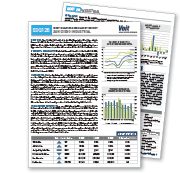 The San Diego industrial market continues to struggle, with the countywide vacancy rate tripling to 7.29% over the past three years. The availability rate has followed a similar path, rising to 10.1% after bottoming out at 2.9% in Q2 2022. Asking rents have remained flat year over year, down slightly to $1.41 in Q1. It’s a tenant’s market, with landlords not only offering concessions such as free rent and introductory promotional rates but also upgrading power or, in some instances, lowering credit requirements for tenants. Leasing activity increased at the end of 2025 and into the start of 2026, but turmoil in the Persian Gulf and the ensuing supply chain disruptions will put inflationary pressure on the economy, potentially reducing leasing activity.
Patrick Connors, SIOR, SVP/Partner, says in this analysis, “the most notable trend in San Diego’s industrial market is the growing availability of low-cost sublease space. Many companies are moving away from traditional three-to-seven-year lease structures and opting instead for more flexible, short-term subleases. Ongoing tariff fluctuations—and more recently, rising oil prices driven by the war in Iran—have created significant uncertainty around operating costs. As a result, businesses are prioritizing low-cost, short-term solutions over long-term price certainty.”
Mid Counties
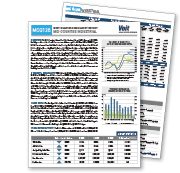 The vacancy rate for the Mid Counties industrial market dropped 62 basis points year over year to 5.91% in Q1 2026, the second straight quarter of positive absorption. The availability rate remained nearly unchanged from Q1 2025 at 9.59%. The development pipeline remains at cycle lows with no new deliveries in the quarter and limited construction activity, reducing the risk of additional supply-driven pressure on vacancy. Despite the decrease in vacancy, the average asking lease rate declined to $1.30 PSF in Q1 2026, down 10.9% from the $1.46 PSF recorded in Q1 2025.
Cargile reports that tenant concessions remain abundant, especially for buildings larger than 50K SF, with tenant improvement allowances ranging from $1 PSF to $3 PSF. Free rent is also prevalent in most leases right now. Heading into Q2, the Mid Counties industrial market carries its most favorable supply-side conditions in more than a decade.
Orange County
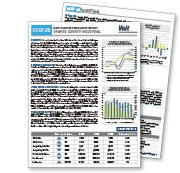 Orange County kicked off 2026 on a high note, registering its first quarter of meaningful positive net absorption since early 2023. Despite the positive net absorption, vacancy increased by nearly 9% as 712,208 SF of new construction was delivered to the submarket. The construction pipeline is now at its lowest level since early 2020, and developers are generally requiring prelease commitments before breaking ground. Asking rents continued to decline slightly year over year to $1.47.
Traditional distribution users remain cautious, and some segments continue to sublease excess capacity back to the market. Jordan Kemper, Senior Associate in the Irvine office, reports that demand is increasingly led by manufacturing, including aerospace, defense, and third-party parts manufacturers, due to a surge in government contract volume. “Large-format buildings 80,000 SF and above continue to see subdued demand, creating opportunities for tenants looking to expand into larger footprints. Buildings under 25,000 SF are absorbing at a faster pace, driven by lease terms more favorable to tenants than at any point in the past several years,” writes Kemper.
“Overall, leasing and owner-user activity is tracking above the pace of the past few years,” says Kemper. “Tenants have more options, more leverage, and more time to evaluate decisions. Owner-users are also moving decisively to well-suited buildings as pricing expectations become more aligned with current market conditions.”
For a deeper dive into the individual markets, visit the Voit Market Reports page. To learn more about how we can assist you with your commercial real estate needs, contact one of Voit Real Estate Services’ trusted commercial real estate advisors.